India’s taxi industry is entering a new phase. Electric vehicles, app-based bookings and new mobility companies are changing the way people travel. The arrival of Vietnamese electric mobility company Green SM with its Green SM Limo service has brought another competitor and another choice for Indian customers.
Electric mobility is a welcome development. Cleaner vehicles, improved technology and better travel experiences can benefit everyone. But there is another side of this change that deserves equal attention: What happens to the thousands of Indian taxi owners, drivers and small transport businesses that have invested their savings in this industry?
For many drivers, a taxi is not just a vehicle. It represents their livelihood, monthly loan instalments, children’s education and the financial responsibilities of their families.
At GOGO TAXI, we believe the future of transportation should not be measured only by the number of electric vehicles on the road. It should also be measured by customer choice, driver welfare, fair competition, safety and long-term sustainability.
1. Green SM in India: A New Chapter in Electric Taxi Services
Green SM officially launched its Green SM Limo electric taxi service in New Delhi on June 5, 2026. The company entered the Indian market with the VinFast Limo Green, a seven-seater electric vehicle designed for passenger transportation.
The launch introduced another business model to India’s taxi market: a dedicated electric fleet with a managed booking and driver service system.
For customers, Green SM in India represents another option to consider. For the taxi industry, it introduces a new competitor and encourages existing operators to examine their services, technology and operating costs.
However, a launch announcement and an expansion plan are not the same as confirmed service availability in every Indian city. Customers should check the company’s official app or website for the cities and locations where bookings are actually available.
Read the official Green SM India launch announcement.
2. The People Behind India’s Taxi Industry
When discussing the future of taxi services, we should not forget the people who have built this industry over many years.
Across Indian cities, thousands of individuals have purchased vehicles through bank loans, personal savings and family support. Some operate independently. Others work with travel agencies, corporate transport providers and online platforms.
A driver who purchased a sedan or SUV a few years ago may still be paying monthly instalments. Along with the EMI, there are fuel costs, insurance, permits, servicing, tyres, repairs and family expenses.
These costs do not disappear when a new company enters the market.
A taxi owner may have a vehicle that is still in good condition but suddenly face pressure to reduce fares or risk losing customers. A driver who depends on daily bookings may find it difficult to compete with a large company that has a different fleet investment and operating model.
The discussion around Green SM in India should therefore include more than electric vehicles and attractive fares. It should also consider the existing drivers who depend on the taxi industry for their income.
Competition is necessary. But fair competition should give every genuine operator an opportunity to survive, improve and grow.
3. Why Traditional Indian Taxi Owners Face Financial Pressure
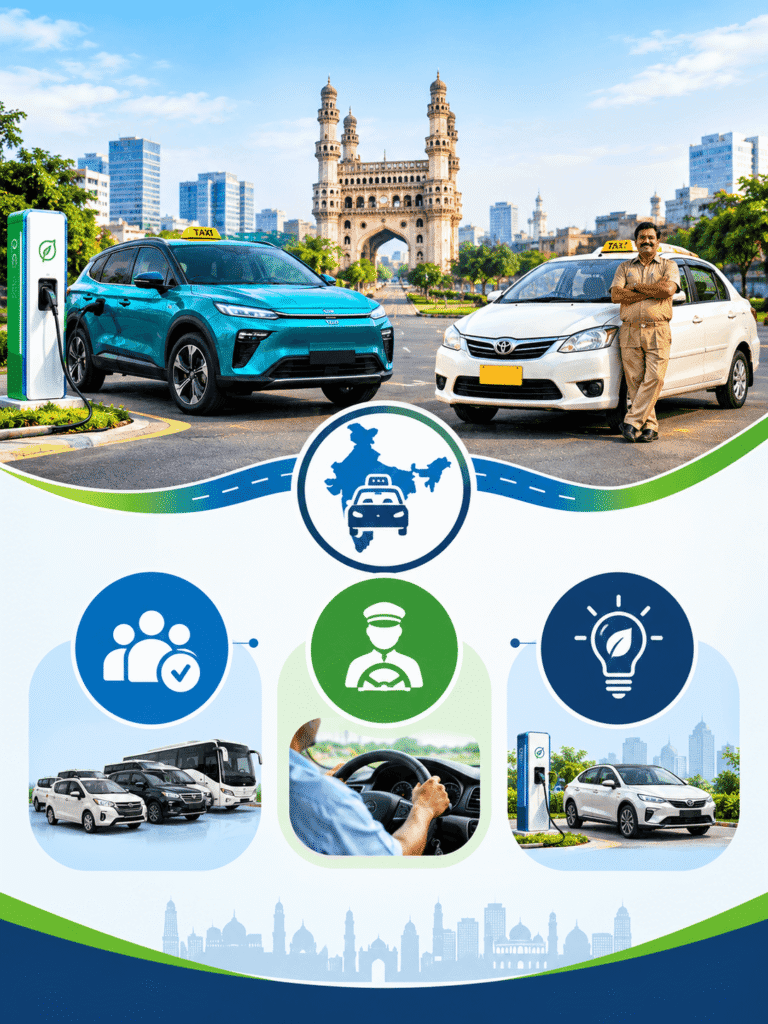
A large mobility company and an individual taxi owner do not always operate with the same financial structure.
An individual owner may have to manage:
- Monthly vehicle loan instalments.
- Petrol, diesel or CNG expenses.
- Insurance, permits and road taxes.
- Regular maintenance, tyres and unexpected repairs.
- Driver salaries or personal household expenses.
- Periods with fewer bookings and no guaranteed income.
A taxi owner may also spend several hours waiting for a return booking after completing an outstation journey. The vehicle continues to consume time and money even when it is not earning.
This is why comparing two taxi services only by their advertised per-kilometre rate can be misleading. The customer sees the fare, but the driver has to manage the complete cost of operating the vehicle.
The arrival of new electric taxi services, including Green SM in India, may increase competition. But the financial realities of existing taxi owners should also be part of the industry conversation.
A sustainable taxi business must consider both sides: an affordable journey for the passenger and a reasonable earning opportunity for the person providing the service.
4. Low Taxi Fares: Are They Sustainable in the Long Run?
Affordable fares attract customers. Every passenger wants a comfortable journey at a reasonable price.
But a low introductory offer and a permanent operating fare are two different things.
When comparing taxi prices, customers should look beyond the advertised starting rate. They should check the final fare, minimum kilometres, waiting charges, tolls, parking, driver allowance, night charges and cancellation conditions.
The same applies to electric taxis. Electricity may cost less per kilometre than petrol or diesel, but the total cost of an electric fleet includes vehicle purchase, financing, charging infrastructure, battery performance, maintenance, insurance and vehicle downtime.
A low fare is beneficial when it is supported by an efficient and sustainable business model. It becomes a concern when the economics are unclear or when service quality and driver earnings are affected.
Customers should compare the actual booking price and conditions rather than assuming that every advertised low fare will remain available permanently.
The growth of Green SM in India also creates an opportunity for customers to compare services more carefully and understand what they are receiving for the price they pay.
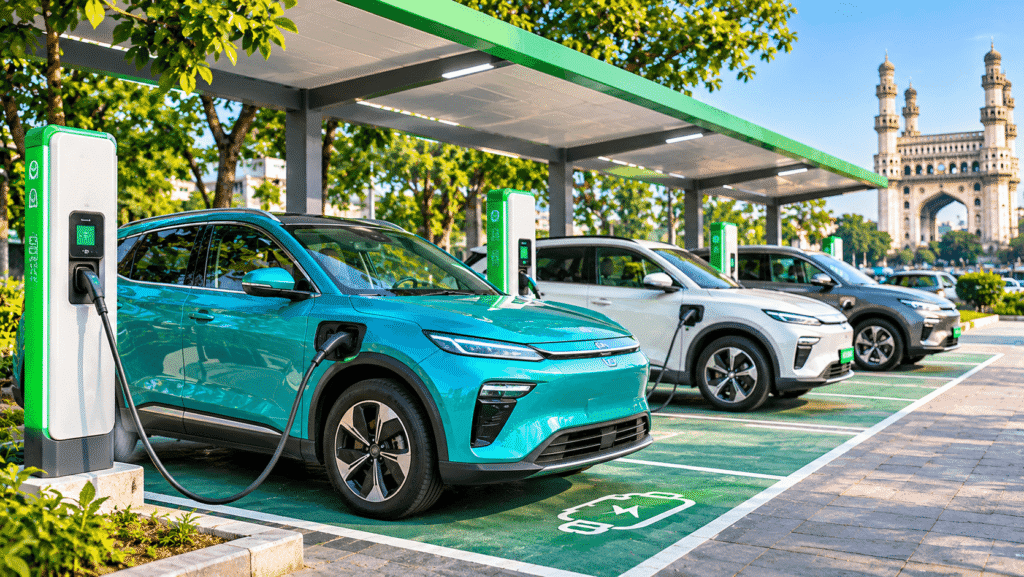
5. India Needs Electric Mobility Built with Indian Innovation
We welcome electric vehicles. India needs cleaner transportation, better air quality and modern mobility solutions.
But an important question deserves attention:
Why should India not build more mobility solutions with Indian engineering, Indian business understanding and Indian drivers at the centre?
India already has companies developing and manufacturing electric vehicles. Indian manufacturers such as Tata Motors and Mahindra have contributed to the country’s electric mobility ecosystem.
The opportunity now is to develop more vehicles and services specifically suited to the everyday requirements of Indian taxi operators.
An electric taxi designed for India should consider:
- Affordable purchase prices and practical financing for individual drivers.
- Reliable battery performance in Indian weather and traffic conditions.
- Adequate driving range for full-day commercial operations.
- Convenient charging facilities in cities and on major travel routes.
- Accessible service centres, spare parts and battery support.
- Comfortable seating and luggage capacity for families and business travellers.
- Realistic resale value and long-term maintenance costs.
The challenge is not simply to manufacture an electric car. It is to build a complete ecosystem in which an Indian driver can purchase, operate, maintain and earn from that vehicle without taking an unreasonable financial risk.
We should welcome global technology and investment. At the same time, Indian companies, engineers, entrepreneurs and policymakers should work together to create strong domestic alternatives.
Green SM in India is an example of international electric mobility entering the Indian market. That should also encourage Indian businesses to develop solutions that understand local roads, customer expectations and the financial challenges faced by Indian drivers.
The future should not be a competition based only on which country introduces an electric taxi first. It should be about who builds a reliable, affordable and fair mobility system for Indian roads and Indian livelihoods.
6. Can Existing Taxi Drivers Afford to Move to Electric Vehicles?
Many traditional taxi drivers may want to move to electric vehicles, but the transition is not equally easy for everyone.
A driver who already has a petrol or diesel vehicle cannot simply replace it overnight. The existing loan may still be active. The driver may not have enough savings for a new vehicle, and charging access may be limited near their home or operating area.
Before purchasing an electric taxi, an individual operator should calculate:
- The total on-road vehicle cost and down payment.
- Monthly EMI and loan tenure.
- Real-world range with passengers, air conditioning and luggage.
- Charging cost and time.
- Availability of charging facilities during working hours.
- Battery warranty, service support and replacement conditions.
- Expected daily bookings and realistic monthly income.
Electric mobility can create opportunities for drivers, but the transition should be practical and financially accessible.
Government incentives and industry partnerships can help. However, support should reach individual taxi owners and small fleet operators too, not only large fleet companies.
As Green SM in India brings more attention to electric taxi operations, policymakers and manufacturers should also consider how ordinary commercial drivers can participate in this transition.
7. Is There Political Support Behind Green SM in India?
This is a question some people may naturally ask when a foreign mobility company enters a large market such as India.
Green SM’s official announcement states that its June 5, 2026 launch event in New Delhi was attended by Haryana’s Industries and Commerce Minister, a representative of the Commission for Air Quality Management, representatives from Indian government agencies, the Vietnamese Embassy and business partners.
Such attendance shows that the launch received official visibility and that the company was engaging with public institutions and business stakeholders.
However, the attendance of government representatives at a launch event is not evidence of political pressure, a secret arrangement or special treatment. We should not make such allegations without reliable documents or verified reporting.
India has a regulatory framework for app-based taxi aggregators. The Motor Vehicle Aggregator Guidelines, 2025 set out provisions relating to aggregator operations, driver welfare and passenger safety. Licensing and implementation involve the appropriate government authorities.
The important questions for every mobility company are straightforward:
- Are the required licences and approvals in place?
- Are vehicles and drivers compliant with applicable rules?
- Are passengers receiving safe and reliable services?
- Are drivers treated fairly and paid transparently?
- Are complaints and emergencies handled responsibly?
These questions should apply equally to Indian companies and international companies.
The debate about Green SM in India should focus on transparent regulation, fair opportunities and responsible business practices, rather than unverified political allegations.
Read the Motor Vehicle Aggregator Guidelines, 2025.
8. India Needs Mobility Models That Put Drivers at the Centre
India does not have to choose between electric mobility and driver welfare. Both can move forward together.
There are Indian initiatives exploring different approaches. Bharat Taxi, for example, is a cooperative-led mobility platform that aims to give drivers a greater role in the business.
This is an important direction for the industry. A driver should not be seen only as someone who operates a vehicle. Drivers are an essential part of the transportation ecosystem and should have a fair opportunity to earn, grow and participate in its future.
Indian manufacturers, technology companies, fleet operators, financial institutions and government bodies can work together to develop mobility solutions that support both passengers and drivers.
The goal should be a stronger Indian transportation ecosystem, one that welcomes innovation from anywhere but also creates opportunities for Indian talent and local businesses.
As the market changes with developments such as Green SM in India, we should also encourage Indian-owned mobility businesses and driver-focused models to grow.
9. What Should Customers Compare Before Booking a Taxi?
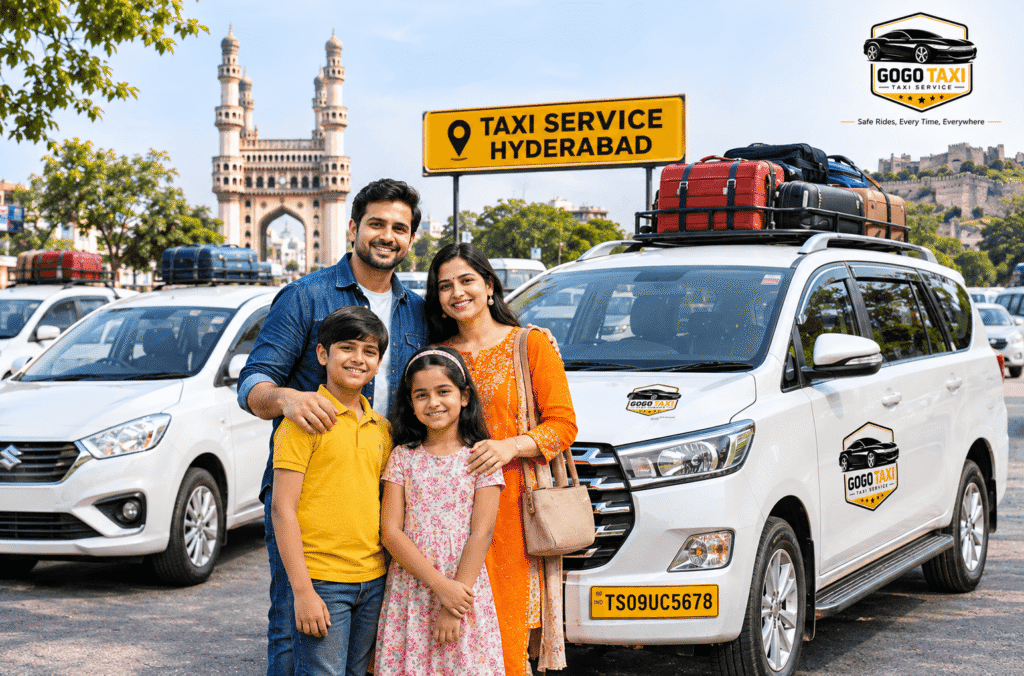
Customers should have the freedom to choose a service based on their actual travel requirements. A low advertised price alone may not tell the complete story.
Before booking, consider:
- Final fare: Check the complete price, including applicable additional charges.
- Vehicle choice: Make sure the vehicle has enough seating and luggage space.
- Driver details: Check whether driver information and trip details are shared.
- Safety: Look for appropriate vehicle documents, safety arrangements and customer support.
- Reliability: Confirm pickup time, route and availability.
- Customer assistance: Make sure you can contact someone if your plans change.
- Travel requirements: A daily commute, airport transfer, wedding and outstation journey may need different vehicle arrangements.
Whether comparing an electric taxi, an app-based cab or a traditional operator, customers should choose based on the complete travel experience.
The best taxi service is not necessarily the one with the lowest advertised fare. It is the one that meets the passenger’s requirements with dependable service and transparent communication.
10. Why Consider GOGO TAXI?
Green SM brings another choice to the taxi industry. GOGO TAXI brings multiple travel solutions under one roof.
We believe customers should have the freedom to choose a transportation service that matches their actual requirements. Not every journey needs the same vehicle, price structure or travel arrangement.
Here is what customers can explore with GOGO TAXI:
Freedom of vehicle selection: Choose from sedans, SUVs, Innova Crysta, Tempo Travellers and buses, depending on your travel requirements and availability.
Personalised travel arrangements: Discuss your pickup location, destination, timing, passenger count and vehicle requirements with our team.
Airport transportation: Arrange airport pickups and drops with advance coordination.
Outstation journeys: Plan intercity travel, family holidays and pilgrimage trips.
Corporate transportation: Explore regular employee transportation and business travel arrangements.
Group bookings: Arrange transportation for weddings, events, family functions and group tours.
Direct assistance: Contact our team for booking enquiries, quotations and vehicle availability.
Whether you need a single cab, a family SUV, a monthly employee transportation arrangement or multiple vehicles for an event, our aim is to understand the requirement and suggest a suitable travel solution.
Explore our services:
- GOGO TAXI – Cab Services in Hyderabad
- Monthly Cab Services in Hyderabad
- Employee Transportation Services in Hyderabad
- Local and Outstation Cab Services
- Luxury Car Rental and Wedding Transportation
11. The Future of India’s Taxi Industry: Competition with Responsibility
The arrival of new companies will bring competition. Existing operators will need to improve their services, adopt technology and understand changing customer expectations.
That is not a bad thing. Competition can encourage better vehicles, cleaner transportation, improved booking systems and more professional customer service.
But the industry should also discuss driver earnings, vehicle financing, fair pricing, insurance, safety and access to charging infrastructure.
A taxi driver should not have to carry the entire financial burden of a changing industry alone. Similarly, customers should not have to compromise on reliability and safety simply to find an affordable ride.
The future of India’s taxi industry should be built on three important principles:
- Customer choice: Different travel needs should have different transportation solutions.
- Driver dignity: Drivers and vehicle owners should have a fair opportunity to earn and grow.
- Responsible innovation: New technology and electric mobility should create long-term value rather than short-term attention.
Green SM in India is one development in a much larger transformation. The long-term success of the industry will depend on whether new and existing businesses can create value for customers while giving drivers a fair opportunity to participate.
12. Frequently Asked Questions
What is Green SM in India?
Green SM is a Vietnamese-origin electric mobility company that launched its Green SM Limo taxi service in New Delhi on June 5, 2026, using VinFast Limo Green electric vehicles.
Is Green SM an Indian taxi company?
Green SM is a Vietnamese-origin mobility company operating in India through its Indian business operations. Its Indian service was launched initially in the Delhi-NCR region.
Does Green SM operate in Hyderabad?
Customers should check the official Green SM app or website for confirmed operating locations and current booking availability. Reports or sightings of vehicles in a city should not be treated as confirmation that public bookings have started there.
Are electric taxis cheaper than petrol or diesel taxis?
Electric taxis can have lower energy costs per kilometre, but the total operating cost also depends on vehicle price, financing, charging access, battery performance, maintenance, insurance and vehicle utilisation.
Will electric taxis affect traditional taxi drivers?
They may increase competition and encourage existing operators to adapt. The actual impact will depend on pricing, customer demand, fleet investment, driver earnings and the availability of affordable electric vehicles.
Should customers choose only electric taxis?
Not necessarily. Customers should choose a vehicle and service based on their journey, budget, passenger count, luggage, comfort, safety and availability. Electric mobility is an important option, but different journeys may require different transportation solutions.
What services does GOGO TAXI provide?
GOGO TAXI offers transportation solutions including local and outstation cabs, airport transfers, monthly cab services, employee transportation, wedding and event transportation, and group travel arrangements. Vehicle options include sedans, SUVs, Innova Crysta, Tempo Travellers and buses, subject to availability.
Final Thoughts from GOGO TAXI
We welcome electric mobility and technological innovation. A cleaner and more efficient transportation system is good for India’s future.
But we also believe that customers should have the freedom to choose a transportation service that matches their actual requirements. At the same time, Indian drivers, vehicle owners and transport businesses deserve a fair opportunity to grow in this changing industry.
We would like to see more Indian innovation, more Indian electric vehicles designed for commercial use, better charging infrastructure and mobility models that understand the everyday challenges faced by Indian drivers.
Green mobility is one important part of the future. Reliable transportation, vehicle choice and customer trust are equally important.
Green SM brings another choice to the taxi industry. GOGO TAXI brings multiple travel solutions under one roof.
Choose the vehicle that suits your journey. Choose a transportation partner that understands your requirements. Choose GOGO TAXI.
For bookings and enquiries, visit GOGO TAXI and explore the travel solution that works for you.